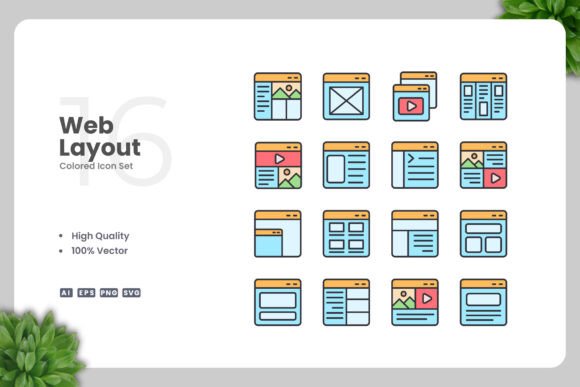
Web Layout Colored Icons for Graphics and Icons
As a brand designer and content marketer, I’ve seen countless graphic design assets come and go. But Web Layout Colored Icons stands out as a versatile and practical addition to any creative toolkit. Its simple and clean design makes it ideal for websites, mobile apps, social media, infographics, and more. Whether you're working on a digital product or a printable design, this asset offers flexibility and style that can elevate your marketing visuals without overwhelming the audience.
The First Impression: Clean, Modern, and Adaptable
From the moment I laid eyes on Web Layout Colored Icons, I was struck by its minimalist aesthetic. The design feels intentional—each icon is balanced, with clear lines and a consistent style. This simplicity makes it perfect for brands looking to communicate a modern, professional image. It doesn’t shout for attention, but it doesn’t blend into the background either. Instead, it provides a subtle yet effective visual anchor that supports the overall message of the campaign.
This kind of design is especially useful for small business branding, where clarity and consistency are key. Whether you’re creating social media graphics or designing packaging inserts, the icons offer a cohesive look that aligns with contemporary design trends. They work well in both casual and premium contexts, making them a flexible choice for lifestyle content, event promotions, and commercial marketing materials.
Real-World Applications: From Social Media to Print
Imagine a small business launching a seasonal product. The team needs eye-catching visuals for Instagram posts, Facebook ads, and Pinterest pins. Web Layout Colored Icons can serve as the foundation for these graphics, offering a unified visual language that reinforces brand identity. The icons can be resized and recolored to match the brand’s color palette, ensuring they fit seamlessly into any design project.
In a real-world scenario, a content creator might use these icons to build a content kit for blog headers, email banners, and lead magnets. The ability to edit them in vector software means they can be scaled without losing quality, which is essential for both digital ads and print materials. For editorial design, the icons add a polished touch to articles, infographics, and newsletters, enhancing readability and visual appeal.
Supporting Marketing Goals: Clarity, Consistency, and Trust
One of the most valuable aspects of Web Layout Colored Icons is how it supports stronger first impressions. In a world where attention spans are short, having a clean and professional design can make all the difference. These icons help establish a clear visual hierarchy, guiding the viewer’s eye through the content without confusion or clutter.
For small business owners, this means better audience trust and recognition. When a campaign looks polished and cohesive, it signals professionalism and reliability. This is especially important for digital products and online services, where first impressions often determine whether a customer takes action.
Where It Shines: Hero Graphics, Campaign Headers, and More
Web Layout Colored Icons excels in areas where visual impact matters. As a hero graphic for a website or campaign header, it adds a layer of sophistication without overpowering the main message. It also works well as part of a design bundle, complementing other elements like Canva templates, social media covers, and promotional banners.
For content marketers, these icons can be used in editorial layouts, content bundles, and downloadable resources. Their versatility makes them a great fit for digital ads, email campaigns, and even merchandise. Whether you're designing a poster for an event or a sticker for a product, the icons provide a professional finish that enhances the overall look and feel.
When to Use with Caution: Formal Branding and Dense Layouts
While Web Layout Colored Icons is a strong asset, it’s not a one-size-fits-all solution. In formal corporate branding, where minimalism is often preferred, these icons may feel too decorative. Similarly, in dense information layouts or small mobile graphics, they could become distracting rather than helpful.
It’s also important to consider low-contrast backgrounds. If the design doesn’t stand out against the background, it may lose its effectiveness. For text-heavy ads or overly minimal brands, the icons might compete with the main message instead of supporting it. Careful placement and testing are essential to ensure they enhance, rather than hinder, the overall design.
Practical Designer Notes: Testing and Integration
Before finalizing any design, I always recommend testing Web Layout Colored Icons with the brand’s color palette. Check how it looks in black and white, and ensure it works well across different font styles—serif, sans serif, script, and display fonts. Review spacing and balance to avoid overcrowding, and preview it on mobile screens to confirm visibility and readability at smaller sizes.
Also, compare it against competitor visuals to ensure it brings a unique value to the table. Finally, verify the commercial license before using it in paid campaigns, client work, or business branding. A solid understanding of these factors ensures that the design asset aligns with the brand’s goals and maintains a professional appearance across all platforms.
Conclusion: A Smart Choice for Creative Marketers
Web Layout Colored Icons is more than just a set of graphics—it’s a tool that supports creative design, brand identity, and marketing visuals. Whether you're building a content kit, launching a digital product, or refreshing your social media visuals, these icons offer a clean, adaptable solution that fits a wide range of applications.
For content creators, small business owners, and digital sellers, this asset can be a game-changer. It helps maintain visual consistency, improves audience engagement, and adds a professional touch to every project. With careful integration and thoughtful use, Web Layout Colored Icons can become a staple in your design workflow, helping you create compelling, memorable campaigns that resonate with your audience.